

Some mornings I catch myself staring at a glowing screen for hours before realizing I haven’t moved more than a few steps. It’s the modern posture: hunched shoulders, coffee cooling nearby, eyes fixed on a laptop that seems to own more of my time than I do.
This is the paradox of the mid-twenty-twenties. We are more connected than ever, tracking our steps, monitoring our heart rates, and letting algorithms suggest what we should eat or how we should sleep. Yet the more data we collect, the harder it seems to live the kind of life those metrics are meant to encourage.
A few years ago, I wrote that most of our health is determined not in hospitals or clinics but in the quiet, daily rhythms of our lives—at work and at home. That still holds true. What has changed is the intensity: our workplaces have invaded our kitchens, our phones keep us tethered to the world at all hours, and our homes have become laboratories of both wellness and burnout.
Work, Reimagined
Work has always been a determinant of health. Long stretches without it corrode physical and mental wellbeing; meaningful work sustains us. But “going to work” is no longer a shared experience.
For many, it is still the familiar routine of showing up on a hospital ward, a school, or a construction site. For others, the office has collapsed into a laptop perched on a kitchen counter. And for some, gig work and unstable contracts have replaced stable jobs altogether.
What we’ve learned since the debates over “quiet quitting” is that health depends not only on employment but on boundaries. Flexibility can protect health, but constant availability erodes it. A paycheck provides security, but purpose provides resilience. The healthiest workplaces in 2026 are those that combine both.
Home as a Health Hub
If work shapes our health, so too does home. But home is no longer just a place of rest—it is where many of us also labor, exercise, educate, and entertain. This layering of functions raises the stakes: the food in our fridge, the design of our neighborhoods, the presence or absence of safe spaces to move all ripple through our bodies and minds.
The prescriptions are familiar: eat better, move more, rest longer. Yet knowing is not the same as doing. Obesity, hypertension, and depression remain stubbornly high. Why? Because education alone doesn’t change behavior. We need environments that make healthy choices the easy, obvious ones.
The Hazards of Hyperconnection
Every era has its hazards. In 2018, I wrote about machinery and sedentary jobs. Today, the hazard is hyperconnectivity.
Notifications blur the line between work and home. Streaming platforms and social feeds devour the hours meant for rest. Even sleep has been reduced to a metric, graded and optimized by our devices. The danger isn’t only physical—it’s psychological. Anxiety is amplified by the sense that we should always be doing more, achieving more, optimizing more.
And then there is AI: both promise and threat. It may free us from drudgery or displace us entirely. Like every technology before it, its health impact will depend less on the code and more on how we use it—or let it use us.
Why Willpower Isn’t Enough
The last century’s great health gains came from systemic change: clean water, vaccines, safer workplaces. No one had to summon extraordinary discipline to benefit. The same principle applies now.
Telling people to “move more” won’t work if neighborhoods lack sidewalks. Advising families to “eat better” rings hollow if fresh food is unaffordable. Suggesting people “unplug” is unrealistic if their jobs require them to be online at all times.
Choice matters, but it is never entirely individual. Our diets, our devices, and even our rest are shaped by culture, infrastructure, and policy. TikTok nudges what teens eat. Urban design dictates whether walking is realistic. Algorithms decide whether we read, scroll, or binge another show.
If we want healthier lives, we must design systems that support them.
A Prescription to consider as we head into 2026
Not rules, but invitations:
For Workers:
- Engage with purpose, not just productivity.
- Stand, stretch, and move—don’t let the chair become your default.
- Take vacations as acts of renewal, not just pauses from work.
- Treat digital life like food: nourishing in moderation, toxic in excess.
For Employers:
- Respect real boundaries—stop rewarding 11 p.m. emails.
- Recognize that flexibility is a health necessity, not a perk.
- Build psychological safety alongside physical safety.
- Replace slogans about wellness with policies that actually support it.
For Policymakers:
- Make healthy choices easy: safe bike lanes, affordable groceries, public spaces.
- Invest in prevention—mental health services, climate resilience, community safety.
- Remember that employment itself is health policy.
For All of Us at Home:
- Choose food that looks like food.
- Move more than your step counter demands.
- Replace one scroll with one real conversation.
- Protect a slice of solitude every day.
Looking Ahead
The problems of 2026 are louder and faster than those of 2018: climate anxiety, economic churn, digital overload. But the prescriptions remain surprisingly stable: a little more health, a little less healthcare.
The urgency, though, is new. The question is no longer what to do—it’s whether we will shape our environments so that the healthy path is not a heroic act of willpower, but the default.
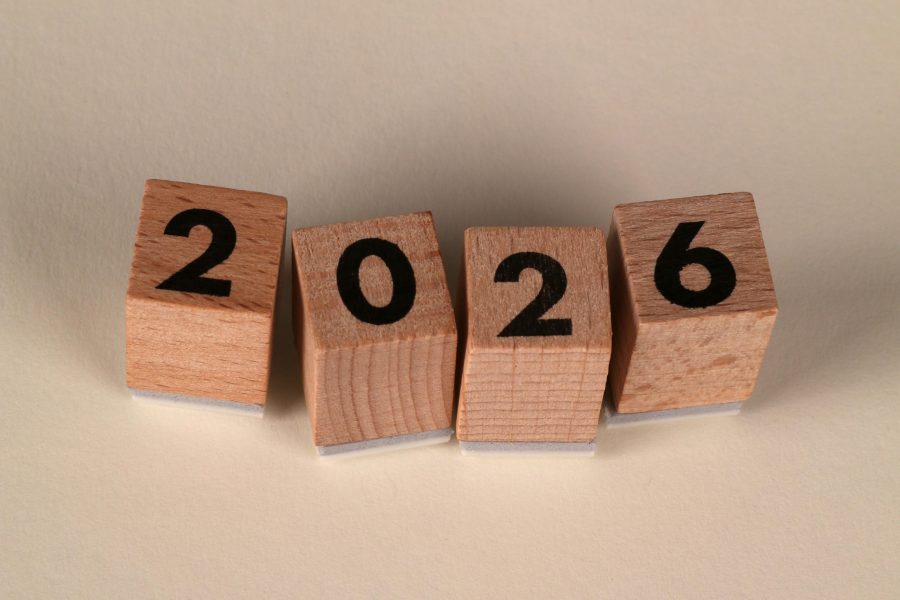
As I write, the leaves fall quietly outside, a reminder that seasons turn and so can we. Here’s to 2026 as a year of renewal—of body, mind, and community—at work, and at home.
Dr. Paul Atkinson, Chief Medical Consultant at WorkSafeNB


